
Share

Over 80 percent lower climate impact in the groundworks at Stockholm South

At Stockholm South, Catena, together with the main contractor ABT Bolagen, has carried out climate calculations and optimised the groundworks for a 450,000 sqm logistics area. Through active choices and clear requirements, the climate impact has been reduced by more than 80 percent.

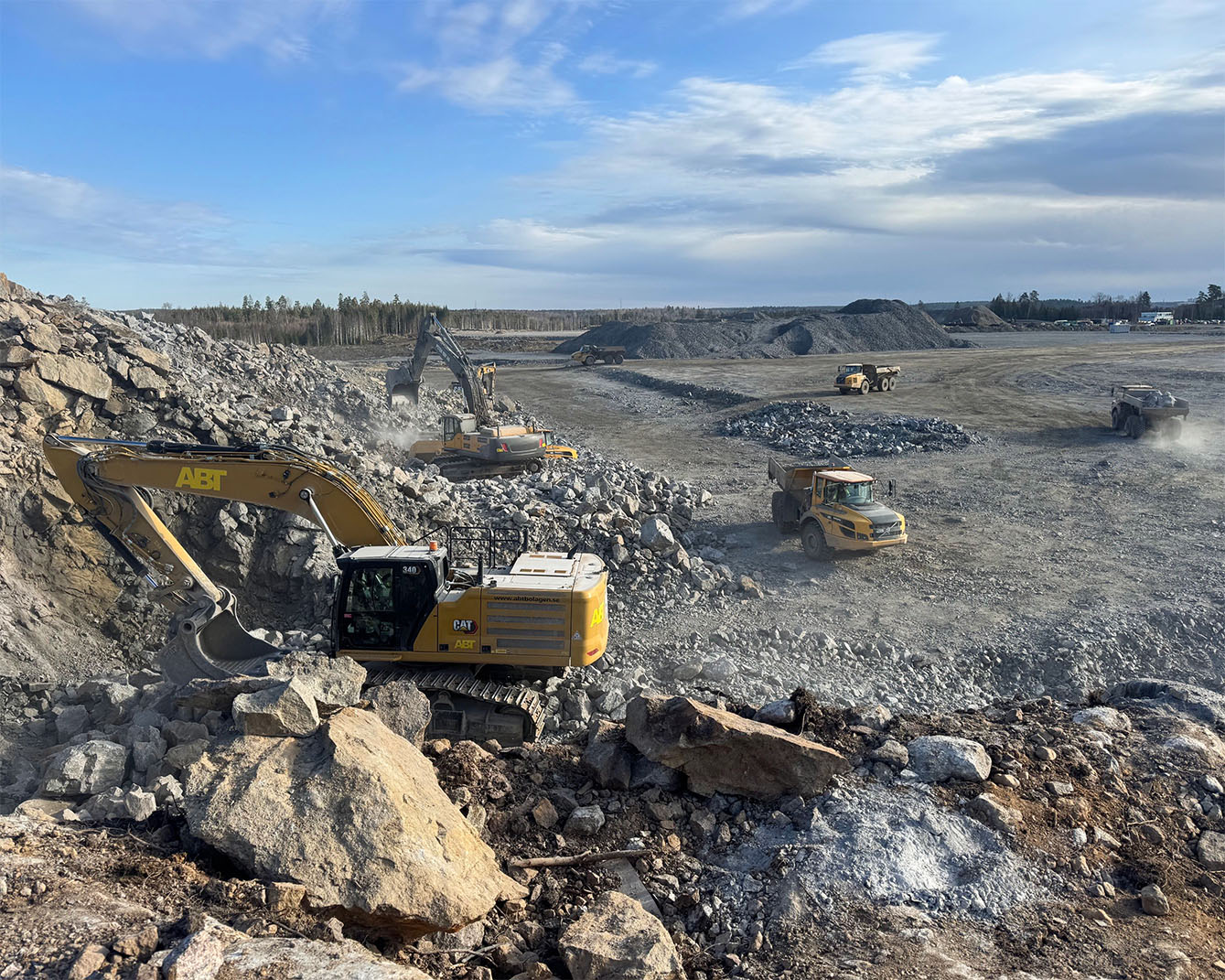
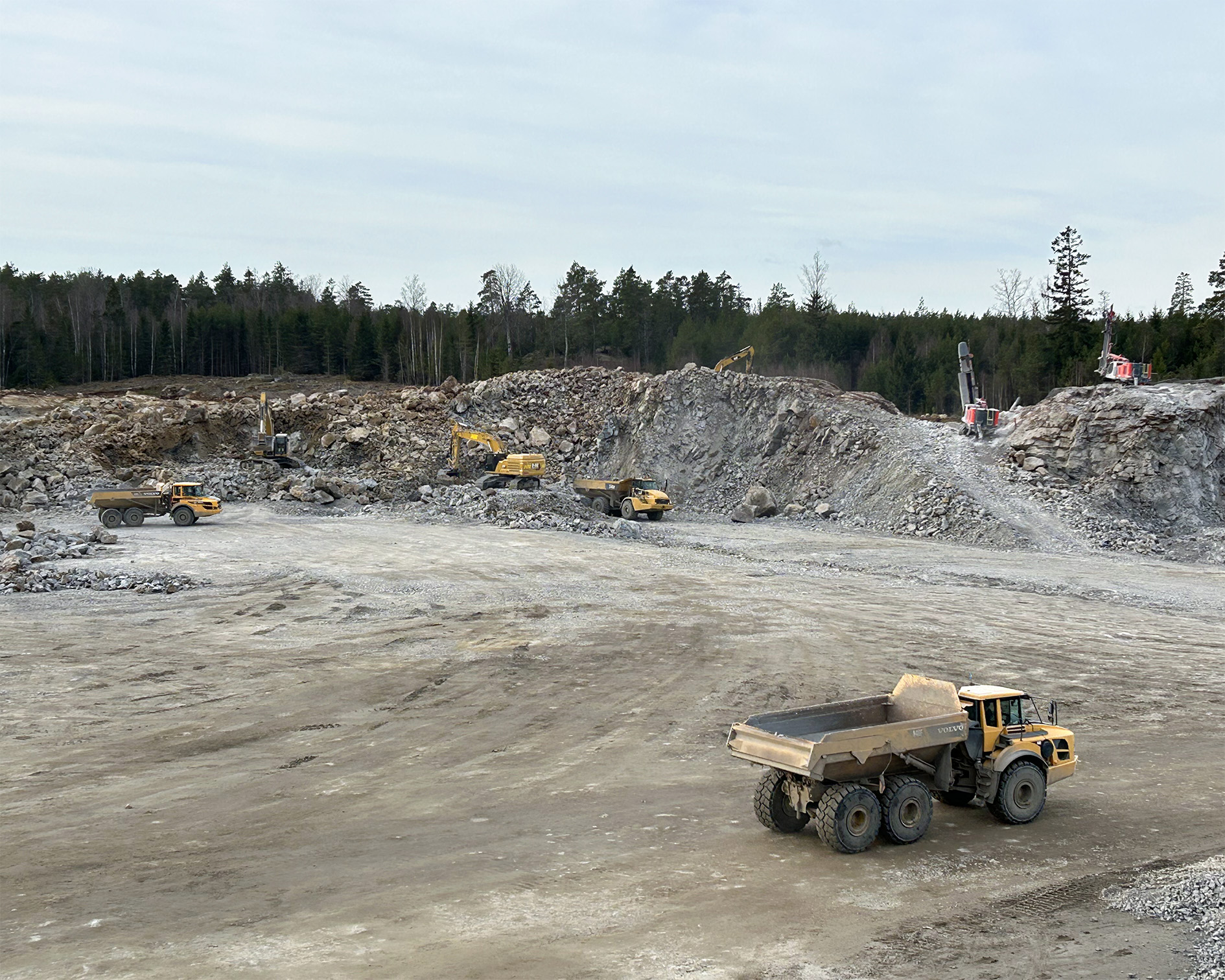
At Stockholm South, Catena carried out extensive groundworks over a three-year period to prepare for future logistics developments. The project was executed in two phases and involved handling approximately 3,000,000 tonnes of material. On behalf of Catena, the main contractor ABT Bolagen carried out bulk earthworks, constructed an approximately 450-metre-long internal road, and installed utilities for water and sewer, electricity, sprinkler systems and stormwater management.

Going one step further

Catena already carries out climate assessments for all new developments in order to understand and reduce the climate impact of our buildings. At the same time, we know that a significant share of emissions arises even before the building is constructed – in groundworks, mass handling and transport.

At Stockholm South, we therefore chose to broaden our perspective by also carrying out a climate assessment of the site and the implementation of the development works, even though this is not yet covered by the requirements of the climate declaration. ABT Bolagen was involved at an early stage, and together we developed a structured methodology for calculating the climate impact of groundworks contracts.

The methodology developed made it possible to visualise and assess the climate impact of the groundworks in a more systematic way. This provided a stronger basis for decision-making and enabled us to actively steer the project towards lower emissions from an early stage.
Sthlm Syd1
Sthlm Syd2

Significantly reduced climate impact

Through the choices made during the project, the climate impact was reduced by just over 80 percent compared with a scenario in which the groundworks had been carried out without specific environmental requirements. The greatest impact came from the transition to HVO100, a renewable alternative to diesel, in machinery and transport. However, the project’s working methods also played a key role.

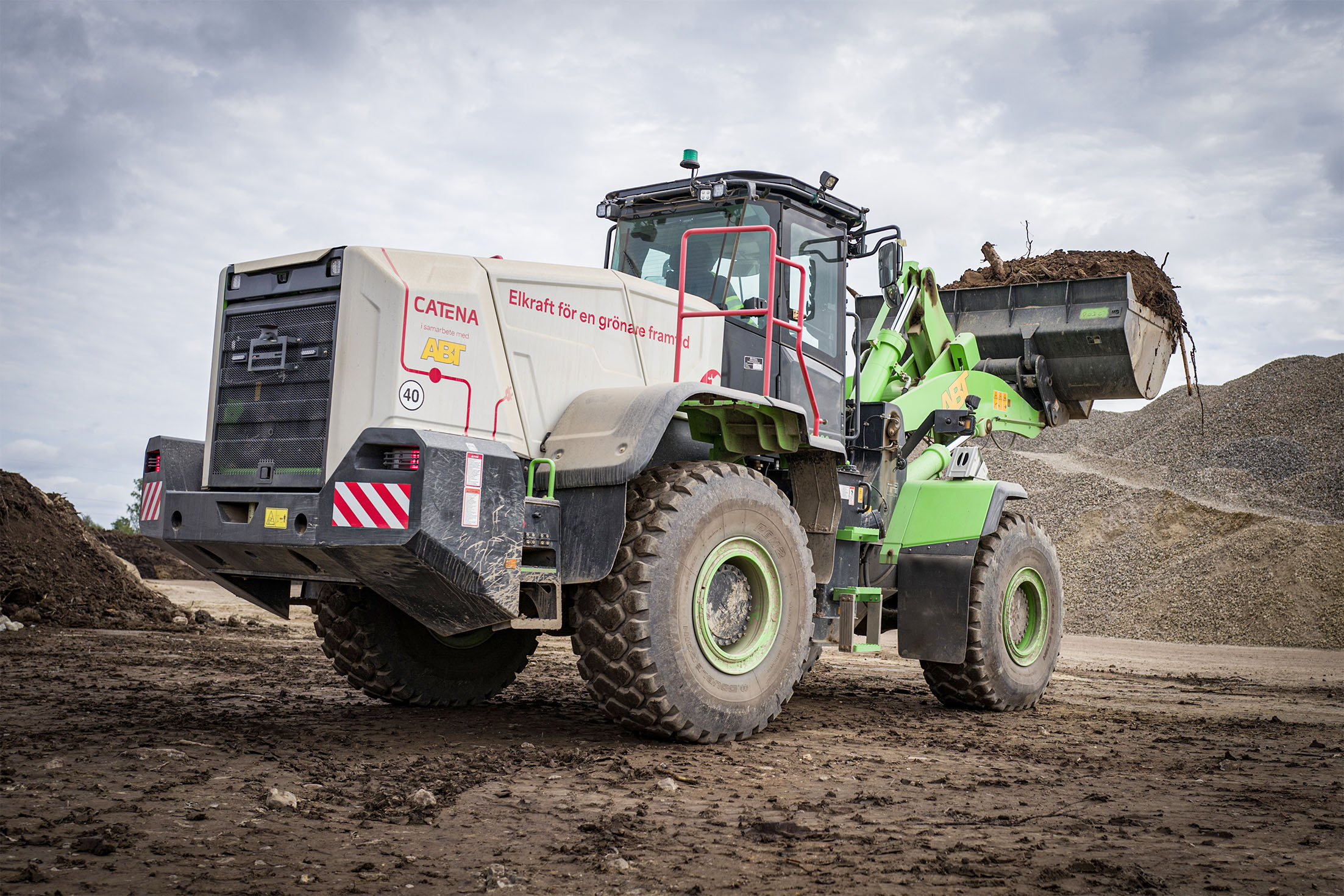
A decisive factor was Catena’s clear requirements. In our construction projects, we always require the use of HVO100. In addition, there was an ambition to test the electrification of construction machinery. Two electric machines were used in the project – a wheel loader and an excavator – which worked well thanks to good access to electricity on site. The grid connection also enabled the sorting plant to be powered by electricity instead of a diesel generator.

Several active decisions also contributed to reducing the climate impact, including careful planning of mass handling, reuse of materials between phases and fewer unnecessary transports.

“By reusing stone and soil materials within the site as far as possible, instead of transporting materials away and bringing in new ones, we have been able to reduce both transport volumes and fuel consumption. Throughout the project, we continuously asked ourselves: Can we carry out this activity in a more climate-smart way?” says Jens Ryd, Project Manager at Catena.

Collaboration that enables change

Early dialogue between Catena and ABT Bolagen was crucial to the outcome. When the contractor’s expertise is engaged at an early stage and the design can be adapted accordingly, better conditions are created for achieving real climate savings.

It has been an open and very positive collaboration. We have made several major changes during the course of the project instead of locking ourselves into less optimal solutions.

Stefan Mårtensson, Site Manager at ABT Bolagen.

The project has provided valuable experience for future developments. Clear climate requirements, careful follow-up and early planning make a difference – both in execution and in the results. With Stockholm South, Catena takes another step in reducing climate impact across the entire value chain. Climate responsibility does not begin at the building’s walls – it begins in the ground.